NUTRITION, EXPLAINED
Microgreens nutrition guide: research, portions and variety
Understand what researchers have measured in microgreens, how portions affect comparisons, and why published findings are not a Nutrition Facts label for our crops.

Are microgreens nutritious?
Research has measured vitamin C, vitamin E, vitamin K1 and carotenoids, including beta-carotene, in microgreens. The amounts differ by variety. These findings support nutrition education, but they do not establish the exact calories, protein or vitamin percentages in our packs.
USDA: assessment of vitamins and carotenoids in microgreens ↗
A pack is not a prescribed serving
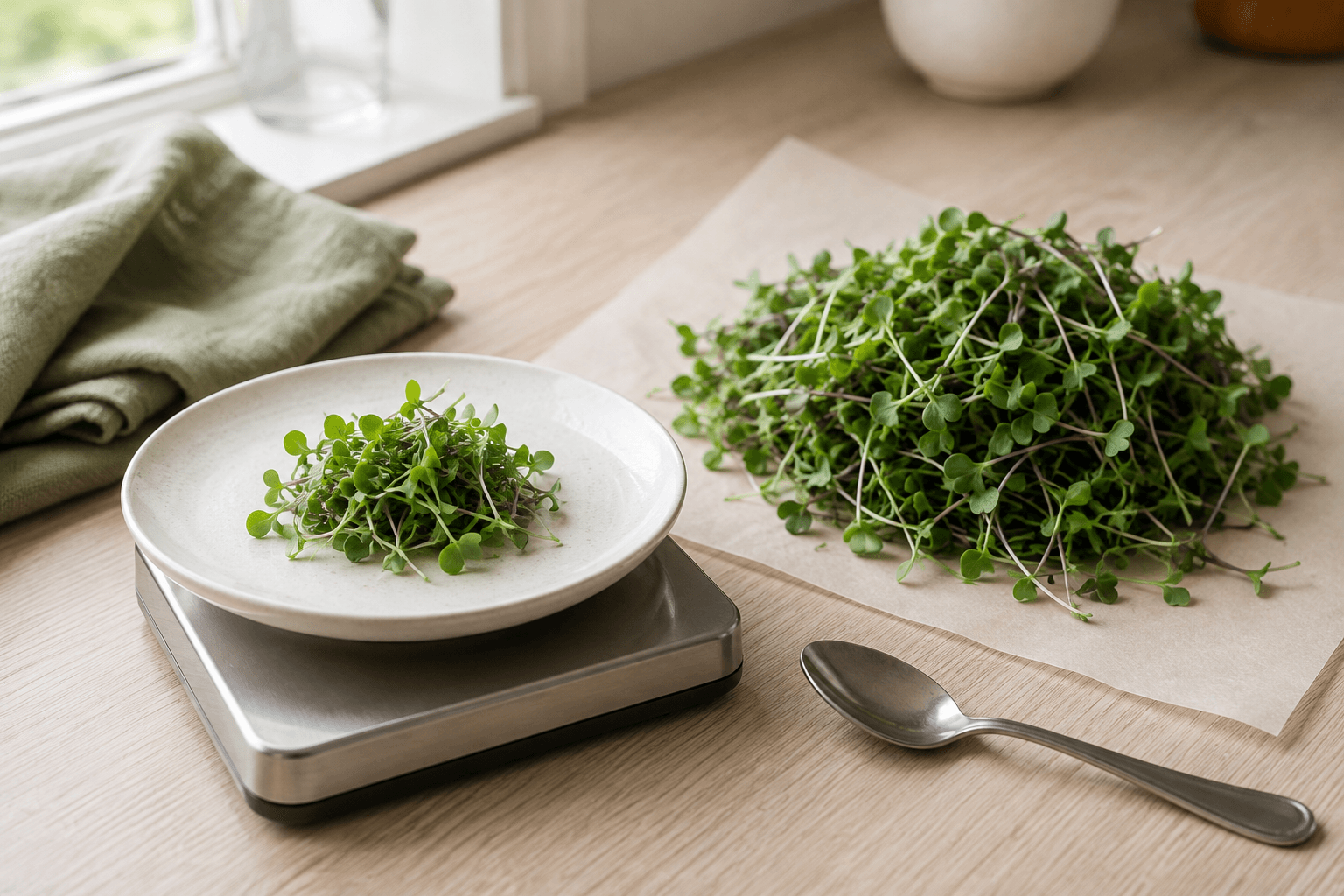
Our planned standard leafy-green packs contain 2 oz (about 57 g); pea and sunflower packs contain 3 oz (about 85 g). For a simple kitchen example, dividing a 2 oz pack into four equal portions gives about 14 g per portion. This is portion planning, not a recommended daily dose or an official labeling serving size. Use a kitchen scale if you want to divide a pack accurately.
What have researchers found in different varieties?
In the 25-variety study described by USDA, red cabbage stood out for vitamin C, cilantro for carotenoids, garnet amaranth for vitamin K and green daikon radish for vitamin E. Those comparisons describe the samples tested. They do not rank every microgreen or establish equivalent values for our named cultivars and blends.
USDA Agricultural Research: Specialty Greens Pack a Nutritional Punch ↗
Why nutrient numbers can vary
USDA notes that growing, harvesting and handling conditions can affect nutrient content. A published result from one crop is therefore a reference point, not a measurement of another grower’s harvest. Comparing equal weights also differs from comparing what someone actually puts on a plate.
Read the USDA explanation of crop and handling differences ↗
Why we do not show a Nutrition Facts panel yet
We have not established product-specific nutrition values for Lakefront Greens. We will not fill that gap with invented numbers or values borrowed from mature vegetables. Our product pages describe flavor, ingredients, pack weight and recorded availability. If we publish nutrition panels later, we will identify an appropriate basis for those values first.
Store and handle your greens thoughtfully
Keep packaged greens refrigerated at 40°F (4°C) or below. Use clean hands and utensils, and keep produce separate from raw meat. Follow package instructions: FDA recommends washing produce under running water, without soap; produce labeled pre-washed or ready-to-eat does not require another wash. Washing reduces contamination but does not eliminate it. Discard rotten produce.
A few common questions.
How many calories or grams of protein are in a pack?
We do not yet have established product-specific values. Pack weight alone cannot tell you calories, protein or the percentage of a vitamin’s Daily Value.
How much should I eat each day?
These guides do not prescribe a daily amount. Start with a portion that suits your meal and preferences. For nutrition advice tailored to a medical condition or prescribed diet, ask your clinician or registered dietitian.
Does a darker color mean a healthier microgreen?
Color is useful when choosing an attractive dish, but it is not a complete nutrition score. Our flavor guide can help you choose variety without claiming one green is best for everyone.
Can I see what is available locally?
Yes. Check the harvest page for recorded availability and the pickup and delivery page for our service area. A nutrition article does not mean a variety is currently available to order.
Prepared by Lakefront Greens using the linked sources. General food education; our crops have not been tested for the nutrition values discussed here.